My mother calls her sister in Havana every Sunday at six in the evening Miami time. The call has been going on, with brief interruptions during periods when the technology failed or one of them was traveling, for almost four decades. My mother left Cuba in 1980. Her sister stayed. The call is the principal channel through which the two of them have continued to share a life across the geographic distance.
I have, over the years, listened to a thousand of these phone calls. Many of them by being in the room while my mother is on the call and overhearing one side of it. Several hundred by being on the call myself, because my aunt likes to hear from me when I am around, and I will often pick up the phone for the last ten minutes of my mother's call and have my own conversation with my aunt before we say good night.
I want to write about what those calls actually contain. Because the diaspora phone call is, I think, one of the more consequential cultural practices of the Cuban diaspora, and because the call is more carefully shaped than the speakers usually acknowledge, and because writing about what the call does and does not contain has helped me understand my own relationship to both halves of my family.
What the calls are about, on the surface
The surface content of the calls is the surface content of most family phone calls. The state of various relatives. The weather. Recent meals. Health updates, which in a family with members in their seventies and eighties, can take up a substantial fraction of any given call. Practical matters — whether a package my mother sent has arrived, whether the medicine my aunt needs is going to be available next month, whether a cousin's daughter has made a decision about her schooling.
The practical matters are not as trivial as they sound. The package my mother sends every couple of months is a substantive material support for my aunt's household. The medicine question is a real question — some of the medications my aunt needs for a chronic condition are not reliably available on the island and have to be sent in from Miami through whatever channel is currently working. The cousin's schooling decision involves real consequences for the cousin and her family. The practical layer is the layer where the call does some of its most substantive work.
The other surface layer is the gossip. The family gossip on both sides. Who is dating whom. Who is fighting with whom. Whose child has done what. The gossip travels in both directions and the two of them, my mother and my aunt, have spent forty years maintaining a shared map of who is doing what across a family that is now distributed across at least five countries. The map is a real intellectual achievement on their part and is one of the things the regularity of the calls has made possible.
What the calls are about, beneath the surface
The deeper content of the calls is more difficult to characterize because the speakers themselves do not, I think, fully articulate it. The call is, in part, a continuous reaffirmation of the relationship between the two sisters and, by extension, between the two halves of the family across the geographic distance. The call is, in part, the management of an ongoing emotional negotiation between a sister who left and a sister who stayed, with all of the unstated questions and unstated grievances and unstated affections that the situation produces.
What I have noticed, listening over the years, is that the call almost never addresses the underlying questions directly. My mother does not say, even now, that she sometimes feels guilty for having left. My aunt does not say that she sometimes feels her sister has abandoned her. They do not say these things. They have not said these things in forty years of calls, as far as I can tell. The things they do not say are present in the room every time they speak, as the unspoken substrate that the conversation is built on top of.
What they do instead is they tend the relationship through the surface content. The asking after each other's health is the asking after each other. The exchanging of family gossip is the maintaining of a shared world. The practical coordination of packages and medications is the practical demonstration of mutual care. The form of the relationship is built out of the small repeated practices, and the small repeated practices are how the unspoken substrate is acknowledged without ever being named directly.
What gets edited out
There are things that get edited out of the calls. I have noticed this over the years and I think it is one of the more interesting aspects of what the call actually is.
My mother does not, in the calls, complain in detail about her own life in Miami. There are things in her life that are difficult — health things, financial things, the ordinary stresses of being seventy-two in a country that did not particularly want to take her in when she arrived at twenty-six — but the calls do not really go there. My mother edits the difficulties out of what she shares. She presents her life as a stable platform from which she can support the relationship with the family back home.
My aunt does the same thing in the other direction. She does not, in the calls, dwell in detail on the things that are difficult about her own life in Havana. The shortages, when they are bad. The political pressures, when they are present. The losses, when relatives or friends die. She mentions these things, briefly, in the way someone mentions weather, and she moves on. She edits her life into a version that fits the call.
The editing is, I think, a form of mutual protection. Each of them edits the harder material because each of them does not want the other to feel powerless about it. My mother cannot fix the shortages and does not want my aunt to feel that the shortages are subject to discussion in a register that would make her vulnerable about them. My aunt cannot fix my mother's difficulties in Miami and does not want my mother to have to perform stability for her. The editing produces a conversation that is, in its way, dishonest, and that is, in another way, profoundly honest about what the relationship can and cannot carry.
The video era
For most of the forty years, the calls were audio only and were expensive and were rationed by the cost. My mother would call once a week and the call would be twenty minutes. The expense of the call disciplined the call. The twenty minutes were used carefully.
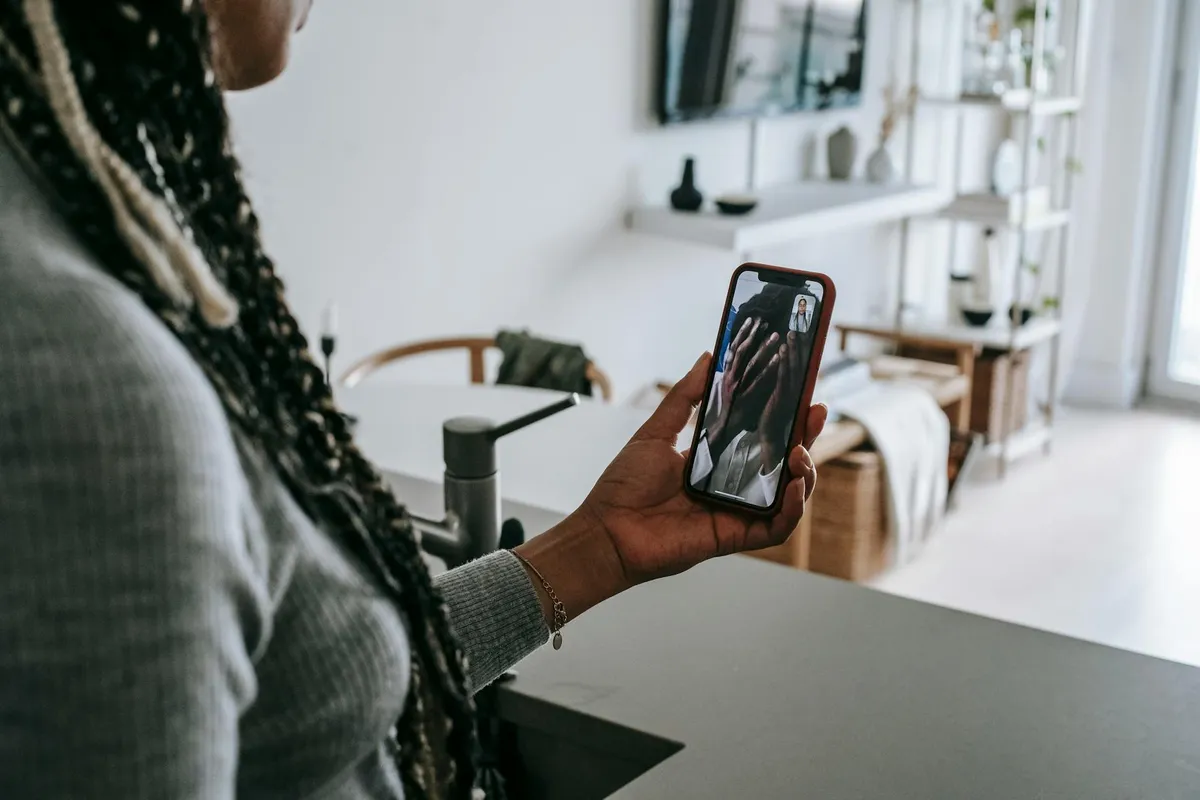
The shift to internet-based video calls, which happened gradually over the past decade as the technology became available on the island, changed the call. The call got longer. The call became cheaper. The call could include video, which meant the two of them could see each other's faces and could see, in the background, the kitchens and the living rooms and the small details of each other's daily lives.
The shift was, on the whole, good. They could see each other. They could see my aunt's grandchildren, who had been born after my mother had stopped visiting regularly. They could see my mother's arrangement of the kitchen, which my aunt had been picturing wrong for thirty years. The video added a layer of presence that the audio-only calls had not had.
The shift also changed the editing. With the video, certain things became harder to hide. The state of my aunt's kitchen during a particularly hard period was visible. The state of my mother's health, when she was managing a difficult treatment, was visible. The edited versions of each other's lives became less editable. The honesty increased, not entirely by choice.
What I have learned from the calls
I have learned a lot from these calls, including things that the calls themselves did not say directly but that the calls made visible by their patterns. I have learned that family love, across geographic distance and across decades, takes a particular form that is built out of small repeated practices more than out of large gestures. I have learned that the editing the two of them have done over forty years is not dishonesty in any morally weighty sense but is a careful management of what the relationship can carry. I have learned that the things they do not say are present in the room and that the room can hold them, even when they are not named.
I have also learned about the diaspora more broadly. The pattern of the Sunday call is not unique to my mother and my aunt. Most of my mother's friends in Miami have similar arrangements with relatives back on the island. Most of my friends in the diaspora — the cousins in Madrid, the friends in Mexico City and New Jersey — have similar weekly practices with the people they have left behind. The call is a kind of cultural infrastructure of the diaspora, with its own conventions and its own unspoken rules and its own ways of carrying what it carries.
What I want to remember
My mother is seventy-two. My aunt is seventy-five. The calls cannot continue forever. There will, at some point in the next decade or two, be a final call between them, after which there will not be another one. I do not know which call that will be. Neither do they.
What I want to remember, when I think about the calls in the future, is the regularity of them. The Sunday-at-six predictability. The fact that for forty years, on most Sundays at six, my mother has dialed her sister and her sister has picked up. The fact that the relationship has been maintained through the slow accumulation of those calls more than through any single moment or gesture. The fact that the form of mutual care across distance that the calls represent is one of the things the diaspora has invented to keep itself a family across the geography that has tried, by being geography, to make it not one.
I will pick up the phone again next Sunday. My mother will be on the call. My aunt will be on the call. I will say hello toward the end and ask after my cousins. The call will end. We will all hang up. The relationship will continue, in the form it has taken, for as long as the geography and the time allow it.