The casa particular system — the private-home accommodation network that began as a limited authorization in the nineties and has expanded substantially since — has become the principal accommodation infrastructure for visitors to Cuba. I have stayed in approximately eighty casas particulares over the years, sometimes for a single night, sometimes for weeks at a stretch. I have stayed in places that are essentially small hotels and in places that are, in every real sense, family homes that happen to include a guest.
I want to write about what the hosting economy has done to the hosts. Because the hosting economy is a substantial part of the contemporary Cuban economy. Because the relationship between guests and hosts in the casa system is unlike most accommodation relationships I have experienced elsewhere. And because the casa hosts I have spoken to over the years have given me, collectively, a more honest picture of what it is to operate inside the Cuban private economy than any other group of people I have access to.
How the system started and how it grew
The casa particular system was authorized in 1997 as part of the limited private-economy openings that the Special Period made necessary. Households were permitted to rent rooms to visitors, with a licensing structure and a tax framework attached. The initial number of authorized casas was small. The system grew over the following two decades through various policy adjustments, periods of restriction, periods of expansion, and the underlying expansion of the visitor economy that produced the demand the casas met.
By the time I was living in Havana in the 2010s, the casa system was well-established and was already serving a substantial fraction of the visitors to the country. The structure varied widely. Some casas were essentially small inns with multiple rooms and substantial staff and operational sophistication. Others were single rooms in family apartments with the family eating breakfast with the guests at the kitchen table.
The growth has continued. The pandemic produced a contraction. The recovery has been uneven. The current state of the system involves a much larger number of casas than the system supported a decade ago and a wider range of operational models than the system included originally.
What hosting does to a household
The introduction of guests into a household is not a neutral operation. The casa hosts I have spoken to have, in different words, all acknowledged that hosting changes the household it operates inside. The change is partly economic — the income from hosting is, in most casa-hosting households, the principal income or a substantial fraction of it — and partly social, in ways that are more complicated to describe.
The principal social change is that the household maintains a continuous performance of itself for an external audience. The host who is also a doctor or a teacher or a retired engineer continues to be a doctor or teacher or engineer, but during the hours when guests are present, the host is also a host. The hosting is a role, and the role is performed, and the performance has effects on the host.
Some of the effects are positive. Many of the hosts I know have said that hosting has made them more cosmopolitan than they would otherwise be, in the sense that they have had sustained conversations with people from countries they will never visit, and the conversations have given them a kind of access to the wider world that the constraints of life on the island would otherwise not have provided. The hosting has been an education.
Some of the effects are more complicated. The performance of hospitality, sustained over years, produces a kind of professional smile that is hard to turn off. The accommodation of guests' preferences becomes a habit. The management of the household's private rhythms around the guests' schedules becomes the default mode of operating the household. The household is reshaped, in subtle ways, by the continuous presence of an external audience.
The economic structure
The economics of casa hosting are more complex than the surface might suggest. The nightly rate that a casa charges has to cover the household's expenses for the guest, the tax and licensing obligations, the household's operational labor, and a margin that constitutes the actual income from the hosting. The margins, in most casas I have stayed in, are tighter than the nightly rate would suggest.
The income from hosting has been, in dollar terms, the principal income for many casa-hosting households, but the dollar income operates inside a Cuban economy in which the relationship between the dollar and local prices has shifted multiple times in the past decade. The hosts I have spoken to have all developed sophisticated approaches to managing the currency situation, with practices that involve holding dollars when the exchange rate is unfavorable, converting strategically when conversion produces good local purchasing power, and using the dollar income in part to make payments that require dollars and in part to convert into local currency for daily expenses.
The licensing and tax structure has changed multiple times over the years. The hosts I know all have a working knowledge of the current structure and have all dealt, at various times, with the administrative complexities that the structure imposes. The administrative work is non-trivial. It is part of what the hosting actually involves.
What guests do not see
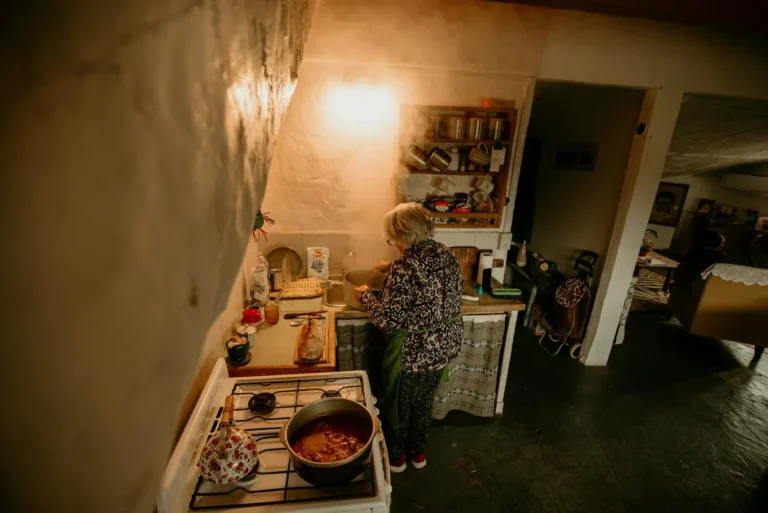
The hosts I have stayed with have all, over the years, told me things about what guests do not see that I have found instructive. The standard interactions between host and guest happen at breakfast, at check-in and check-out, at the occasional moments when a guest asks for help with something. What is not visible to the guest is the substantial labor that happens around those visible moments.
The labor includes the cleaning, which in most casas is done by the host or by family members and which is more demanding than the cleaning of a comparable hotel room because the standards in many casas are higher and the equipment is more limited. The labor includes the laundry, which in many cases involves more work than the rate implies because the local infrastructure for laundry is constrained. The labor includes the food procurement for the breakfasts, which in the current economic environment can involve substantial work across multiple markets to assemble what the breakfast requires. The labor includes the maintenance of the building, the dealings with the utility providers, the management of the small repairs that the constant turnover of guests produces.
The labor also includes the management of the relationship with the guests themselves, which is more demanding than it appears from the guest side. The host who is friendly at breakfast has, in many cases, been up since four-thirty in the morning to prepare the food, has dealt with a leaking faucet between five and six, has answered an email from a previous guest about a left-behind item, and has been at the local market between six-thirty and seven to buy the fruit for the meal. The friendliness is real but the friendliness is also professional, in the sense that it is sustained through circumstances that have not all been favorable to friendliness.
What the system has produced
The system has, on the whole, produced things I think are good for the island. It has created a substantial private-economy infrastructure in which a meaningful fraction of households have direct economic engagement with the visitor economy. It has distributed visitor income more widely than a hotel-based accommodation system would have. It has produced a substantial number of households with sustained international exposure. It has preserved, through the income it has provided, a substantial number of older buildings that the hosts have used some of the income to maintain.
It has also produced things that are more complicated. The dependence of many households on the visitor economy is a vulnerability — the pandemic demonstrated that — and the variation in visitor flows can produce substantial income shocks for the hosts who depend on the income. The reshaping of households around hosting can have effects on family relationships that I have heard hosts describe in private conversation in ways they do not describe publicly. The wear on the hosts themselves, over years of continuous hosting, is real.
The hosts I have come to know
The hosts I have stayed with repeatedly over the years are, in several cases, people I now think of as friends. We have, over multiple stays, moved past the standard host-guest relationship into something more sustained. We have eaten meals together in their private kitchens, not the kitchen-for-guests. We have had conversations late at night, after the other guests had gone to bed, in which the hosts said things they would not have said to a guest they had just met. We have stayed in touch between visits.
What I have learned from those relationships is that the hosting is one thing the hosts do, and is not the totality of who they are. The hosts I know are professionals in their other lives. They are people with families and ambitions and political opinions and senses of humor and ongoing private projects. The hosting supports their lives. The hosting is not their life. The distinction matters and is, I think, the distinction the casa-system's international coverage is most likely to miss.
I will stay in casas particulares for the rest of my time going to Cuba. I will stay in some of the same casas I have stayed in for years. The hosts will be older, and so will I, and the conversations at breakfast will be the continuation of the conversations we have been having for two decades. The casa system is, in its way, one of the more interesting cultural artifacts of the past thirty years on the island, and the hosts who maintain it are some of the most thoughtful interlocutors I have access to. I am grateful, in a substantive way, for what the relationships with my regular hosts have given me. I try to be a good guest in return.