The food guides do not mention Mireya's. The address is not listed on any of the maps that the cruise-ship passengers download. The sign on the door is so small you can walk past it three times before you notice it. The paladar has been operating out of Mireya's front room and the courtyard behind it for fourteen years. The menu is whatever Mireya's sister-in-law has managed to buy at the agromercado that morning. There are usually four things. Sometimes five. I have eaten at Mireya's, by my rough count, approximately three hundred times.
I want to write about why. Not because Mireya's is the best food in Havana — there is better food, in objective terms, at several of the larger paladares that the food guides do cover — but because the question of why a particular place becomes a place you go back to keeps interesting me, and because the answer in Mireya's case is the kind of answer that the food-tourism coverage of Cuba does not usually engage with.
The first time I ate there
I went in 2009 because a friend's mother lived in the same building and said her downstairs neighbor was cooking and I should go. I went on a Wednesday at one in the afternoon. The dining room had four tables, all of them empty. Mireya was at the kitchen doorway in a flowered apron, and she looked up when I came in and asked if I was the friend of Marta's daughter, and I said yes, and she said sit anywhere.
The menu that day was congrí, ropa vieja, a tomato and cucumber salad, and fried plantains. The bread came with butter. The salad was dressed with vinegar and salt and nothing else. The ropa vieja was made with beef her brother-in-law had brought from a relative in Camagüey, which is to say that the ropa vieja was actually beef and not the substitution-meat that a lot of Havana places were serving that year. The congrí was congrí. The plantains were the kind that have been fried twice and salted with the salt that comes from the same shaker as the one on every table in Havana.
It was good food. It was not extraordinary food. What was extraordinary, or what felt extraordinary to me on that first afternoon, was Mireya herself. She brought the plates out and she sat down at my table for a minute and she asked about Marta, and she asked where I was studying, and she asked whether my grandmother was the same Ferrer who used to live on K Street in the sixties, because if so, she had known my grandmother's sister, who had taught her daughter piano when her daughter was eight. The answer was yes. The piano teacher was my great-aunt. Mireya knew, suddenly, more about my family than I did.
What kept me going back
I went back the following week because I had liked the food, and I went back the week after that because I had liked seeing Mireya. By the third month I was going twice a week. By the end of the first year I had a standing thing on Friday afternoons where I would come in around two and Mireya would have saved me whatever was good that day.
The food got better as the years went on, partly because Mireya's sister-in-law got better at the markets and partly because Mireya started experimenting with things she had read about in old cookbooks her aunt had brought from Spain in the forties. There was a year where she was doing a kind of slow-cooked oxtail that I have not had anywhere else, before or since, and that disappeared from the menu because the supplier stopped being able to get the cut. There was a season where she did her own bread because the local panadería was unreliable, and the bread was extraordinary, and then the bread stopped because the flour stopped, and Mireya went back to the panadería loaves with her usual shrug.
The shrug is part of it. The shrug is part of why I keep going. Mireya cooks what she can get and she does not pretend otherwise. The menu is not a fiction maintained to flatter the tourists. The menu is the actual food that is available that day. If the chicken did not come in, there is no chicken. If the tomatoes are bad this week, there is no tomato salad. The honesty about the constraints is a kind of dignity. The dignity is part of what makes the food taste the way it does.
The other regulars
There are maybe twelve people who eat at Mireya's regularly. We mostly know each other by sight. There is a retired engineer who comes on Tuesdays and Fridays and who reads the newspaper at his table and who has been doing this since approximately 2010. There is a woman who I think is a doctor, who comes with her husband on Saturdays. There is a young couple who I think are journalists, who started coming about three years ago and who I have seen interviewing Mireya in the courtyard on at least two occasions.
And there are the ones who come and go. The grandson of a friend of Mireya's who lived in Spain for a decade and who comes when he is in town. The cousin from Holguín who arrives for two weeks at a time. The Argentinian writer who has somehow become attached to the place over the past five years and who I once overheard explaining to a confused first-time visitor that Mireya was the most important person in his life in Havana, which I thought was overstated but not by as much as it sounds.
We do not talk much, the regulars. We nod. We sometimes share a table when the place is full. There is an understanding among us that the place is the place and that the place exists because Mireya is Mireya, and that part of being a regular is not making demands and not complaining about the menu and not asking why the air conditioner is broken again.
What it means to be a regular
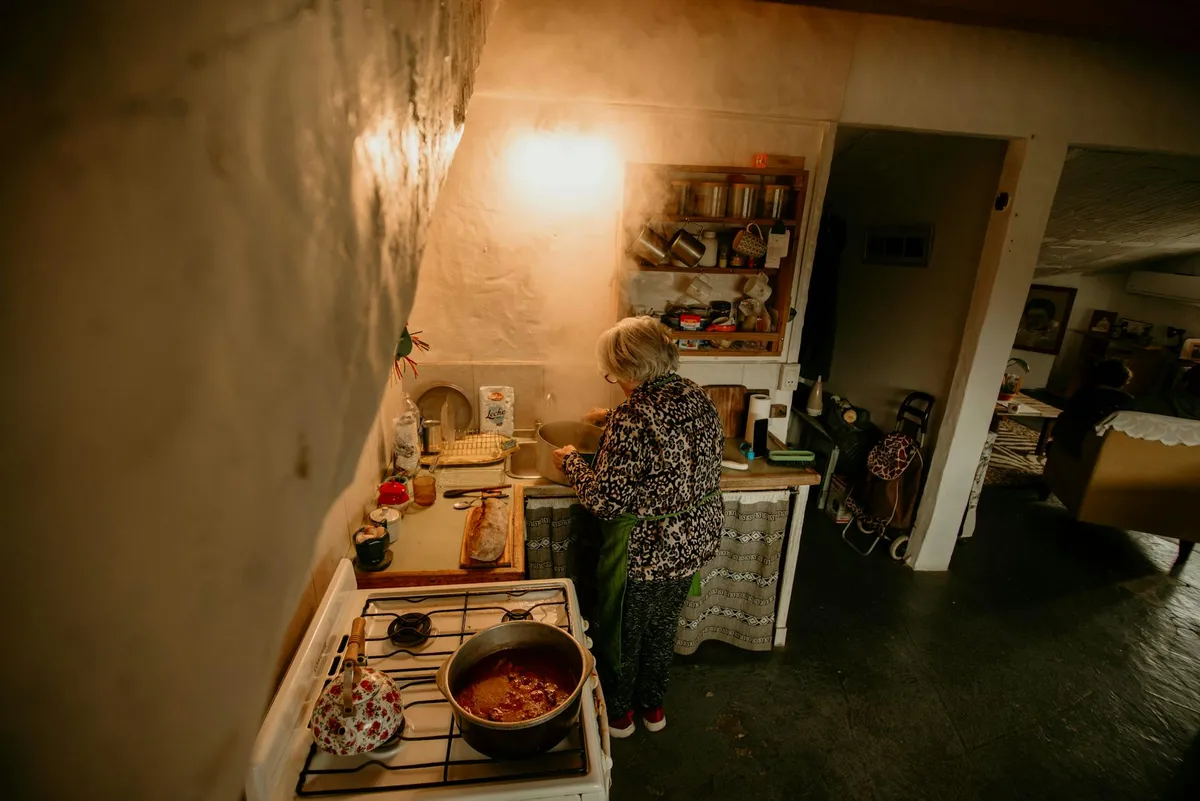
I have thought a lot about why being a regular at a paladar in Centro Habana feels different from being a regular anywhere else I have eaten. Part of it is that the paladar is not really a restaurant in the sense the word usually carries. It is someone's house. The kitchen is the same kitchen Mireya cooks her own dinner in. The dining room is the same room her grandchildren do their homework in when school is out. The relationship between the guest and the host is not the relationship between the customer and the restaurant. It is closer to the relationship between the friend who comes for dinner and the friend who is cooking, with an exchange of money that doesn't quite cover what is actually being given.
When my grandmother died, in early 2018, I had been back in Miami for a month. I flew down for the funeral. I did not have time for anything except the funeral. But I went to Mireya's on the afternoon between the wake and the burial because I needed to sit somewhere where I did not have to be the granddaughter, and Mireya brought me food I had not asked for and did not eat, and she sat with me for an hour while I cried, and she did not charge me, and when I left she said something about my grandmother that I do not remember word for word but that I think about anytime I am sitting in her dining room.
I do not know what Mireya's would do without Mireya. I do not know how much longer she will keep cooking. She is in her seventies now and she has been on her feet in front of that stove for fourteen years and her knees are not what they were. The paladar is the kind of place that depends entirely on the person and that cannot really be inherited or franchised or scaled. When Mireya stops, the place will stop, and there will be a small dining room in a building in Centro Habana that will no longer be what it has been for fourteen years.
I go back, in part, because I know that. I go back because the place is finite and because the person is finite and because the version of Havana that lives in that dining room is finite. I go back because being a regular at Mireya's is one of the things I will carry for the rest of my life, and I would rather carry more of it than less.