I spent a week in Santiago de Cuba in March, my first proper trip there in almost a decade. Santiago is the second city of Cuba and is, in most ways that matter, a city whose cultural specifics are different enough from Havana's that the standard Havana-centric coverage of the island does it a disservice. I want to write about what the week in Santiago felt like, and what it taught me, and what the eastern city is doing that the coverage of Cuba does not adequately render.
I went because a friend's daughter was getting married and because I had not seen Santiago in long enough that I had started to lose my sense of it. I stayed in a casa particular in the historic center, with a family who had hosted me on a previous trip in 2014 and who had not, as it turned out, changed very much. The grandmother was older. The granddaughter was now a teenager. The cooking was the cooking I remembered. The conversation at breakfast picked up approximately where we had left it twelve years earlier.
How Santiago sounds different
The most immediate difference between Santiago and Havana, for someone whose ear is tuned to the Havana version of Cuban Spanish, is the way Santiago talks. The accent is faster. The intonation is more musical. The vocabulary includes words that are not used in Havana or are used in Havana in different senses. The first day, even with my background, I had to work to keep up with conversations that were moving at the pace conversations move at in the east.
The music is also different. Santiago is the birthplace of son, the form that became, over the course of the twentieth century, the most influential strand of Cuban music. The son tradition in Santiago is not a museum piece. It is what people actually play in the courtyards and on the corners and in the casas de la trova in the historic center. The casa de la trova on Heredia Street, the one that everybody knows about, is on the tourist trail now, but the music being played there is still by musicians who learned the tradition from musicians who learned it from the people who were inventing it, and the lineage is short enough that you can feel it.
The smaller venues away from Heredia are where the music is most alive. A friend of my host's drove me to one of them on a Wednesday night, a place I will not name because I do not want to be the writer who inadvertently sends the wrong kind of crowd to a place that is working because the wrong kind of crowd does not know about it. The musicians were a group of five men, all of them in their fifties or sixties, all of them playing instruments that were probably as old as they were. The music they played for three hours was son in a register that I had not heard in that quality of execution in many years.
The mountains and how they shape the city
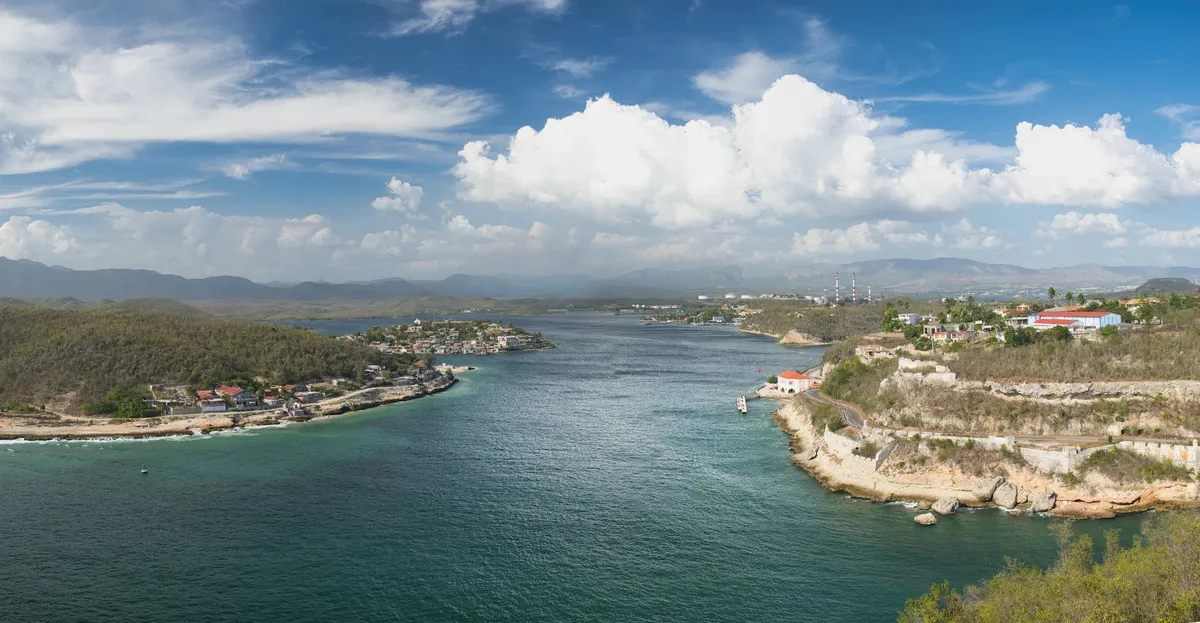
Santiago is in a different kind of landscape than Havana. The Sierra Maestra rises behind the city. The terrain inside the city is hilly in ways that the Havana grid is not. The streets bend and climb. The views, from the higher streets in the city, are out across the bay and toward the mountains. The light moves differently. The wind moves differently.
The relationship between the city and the surrounding landscape is more present than it is in Havana. People talk about the Sierra. The historical memory of the Sierra — the wars of independence, the rebel base of the 1950s — is layered into how Santiago thinks about itself. The relationship between the city and the rural east is more continuous than the relationship between Havana and its surroundings. You feel, in Santiago, that the city is part of a region in a way that Havana feels like a city that has, to some extent, defined the rest of the country.
I walked up to the Castillo del Morro on my third afternoon. The fortification is on a headland overlooking the entrance to the bay. The walk takes about an hour from the historic center if you go the long way, and the long way is the way I went because I wanted to see the neighborhoods on the way out. The view from the fortification — the bay, the mountains behind, the open Caribbean to the south — is one of the views in Cuba that does the most work in terms of explaining the place to itself.
The food, and why it is not the same food
The food in Santiago is recognizably Cuban and is also distinctly different from what you eat in Havana. The cooking has more eastern influences — more African components, more direct references to the cuisines of Haiti and the Dominican Republic — and the seasoning is more aggressive. The plates are spicier than the Havana versions. The portions are different. The use of root vegetables is different.
The casa I stayed in served breakfast that included the kind of preparations I had not had in Havana. There was a particular preparation of cassava that the grandmother had learned from her own grandmother, who had been from the countryside outside Baracoa. There was a kind of fish stew that turned up on my fourth morning that was unlike anything I had eaten in the western part of the island.
I asked about it. The grandmother told me, with no particular ceremony, that the cooking in Santiago had always been different from the cooking in Havana, and that the difference was older than the revolution and older than the republic, and that the cooking traditions of the east had stayed closer to their origins because the east had been less penetrated by the late-colonial and republican-era waves of Spanish cooking that had shaped Havana's food more heavily. I do not know if her food history was technically correct in every detail. The kitchen produced the evidence to support the thesis as the thesis was stated, and the thesis tasted right.
What the city is dealing with
Santiago has been through more in the past decade than Havana has, in the sense that the city has absorbed multiple acute episodes that the western half of the island has been spared. The hurricane damage from various storms over the past several years has been substantial. The economic constraints that affect the whole country have been felt more sharply in the east, where the safety net of the diaspora is thinner and the access to dollar-denominated income is less developed.
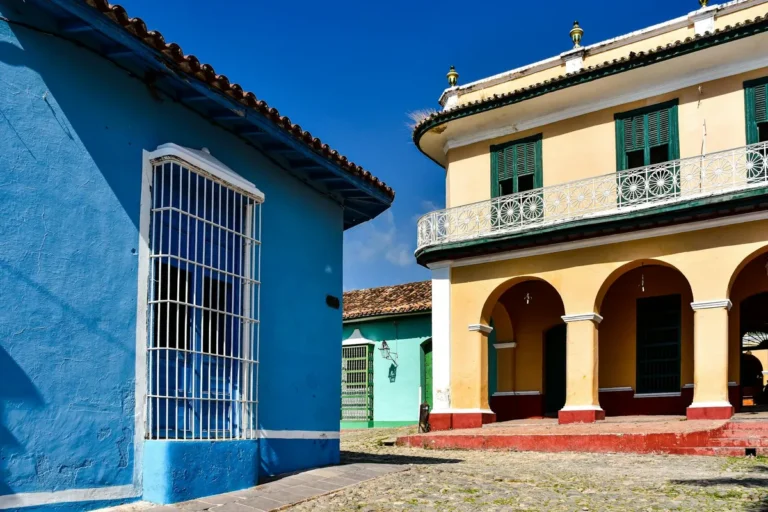
You can see this. The historic center has been substantially restored over the past two decades through a combination of international funding and local effort, and the restoration is genuine and impressive. But the neighborhoods outside the historic center have, in many cases, not had the same investment. The infrastructure is more strained. The visible signs of the constraints are sharper. The number of people you see on the streets at midday who are clearly in difficult circumstances is higher than in comparable parts of Havana.
The city is managing. The Santiago I saw was a city in which people were dealing with difficult conditions and were doing the daily work of getting through them and were not, in the parts of the city I spent time in, broken by them. The dignity of how people were managing was substantial. The cheerfulness — which I want to be careful with because the cheerfulness in difficult circumstances is sometimes the thing that gets exoticized — was the cheerfulness of people who have decided to be cheerful as a way of being who they are, not the cheerfulness of people who are unaware of their situation.
The wedding
The wedding I had gone for was on the Saturday at the end of the week, in a casa de la cultura that the family had rented for the afternoon. The bride is twenty-five. The groom is twenty-seven. They had met at university and had been together for six years and had finally decided to do the ceremony partly because they were ready and partly because the bride's grandmother had said she would like to be there and the grandmother was eighty-six and the wait had reached its useful end.
The ceremony was short. The reception was long. The food was extraordinary, in a way that involved approximately fourteen women I did not know having spent two days cooking everything. The music was a son group that played for three hours and an iPod playlist that played for another two hours, in that order. The dancing started around five in the afternoon. The dancing was still happening at midnight when I left.
The grandmother — the bride's grandmother, the one for whom the wedding had partly been timed — danced. Not for long. Maybe two songs. But she danced. Her granddaughter, who was now twenty-five and a wife, danced with her, and the rest of the family stood in a loose ring around them and watched, and the photographer documented it, and I think that ten or twenty years from now, when the granddaughter is showing her own children the wedding pictures, the picture of the two of them dancing is going to be the one that does the most work.
What I took away
I had gone to Santiago because of the wedding and because I had not seen the city in too long. I had not gone with an agenda. The week was not a research trip in the sense that I think of some of my trips as research trips. The week was a visit.
What I took away, more than anything specific, was the reminder that Cuba is not just Havana and that the coverage of Cuba that elides the rest of the island is missing a substantial amount of what makes the country what it is. Santiago has its own music. Its own food. Its own way of speaking. Its own history. Its own relationship to the rest of the country and to the wider Caribbean. The eastern city is not a variant of Havana. The eastern city is its own thing.
I am going to write more about the east. I have not written enough about it. The fact that I have not done so reflects, partly, the fact that I lived in Havana and not in Santiago, and partly the fact that the writing market for English-language Cuba coverage tilts heavily toward Havana, and partly my own tendency to write what is most available to me to write. I want to push against that. The next time I go down, I am going to spend longer in the east, and I am going to write more about what I find there. The eastern city deserves a fuller portrait than the one I have just begun to sketch.