Trinidad is the most visited small city in Cuba and the one most often described as a museum. The UNESCO designation, the colonial architecture, the cobbled streets, the tourist economy that has grown up around the historic center over the past two decades — all of it has made Trinidad into a city that international visitors arrive at with a particular set of expectations and that international writing about the city tends to render in a particular set of ways.
I have a complicated relationship with the city. I spent time there during my Havana years — visits, mostly, with friends who had family there — and I have been back several times since 2018. I went three Sundays this past year, in part because I wanted to write about Trinidad without writing the standard Trinidad piece, and in part because Sundays in Trinidad are, in my view, the day the city does its most interesting work.
What Sunday actually looks like
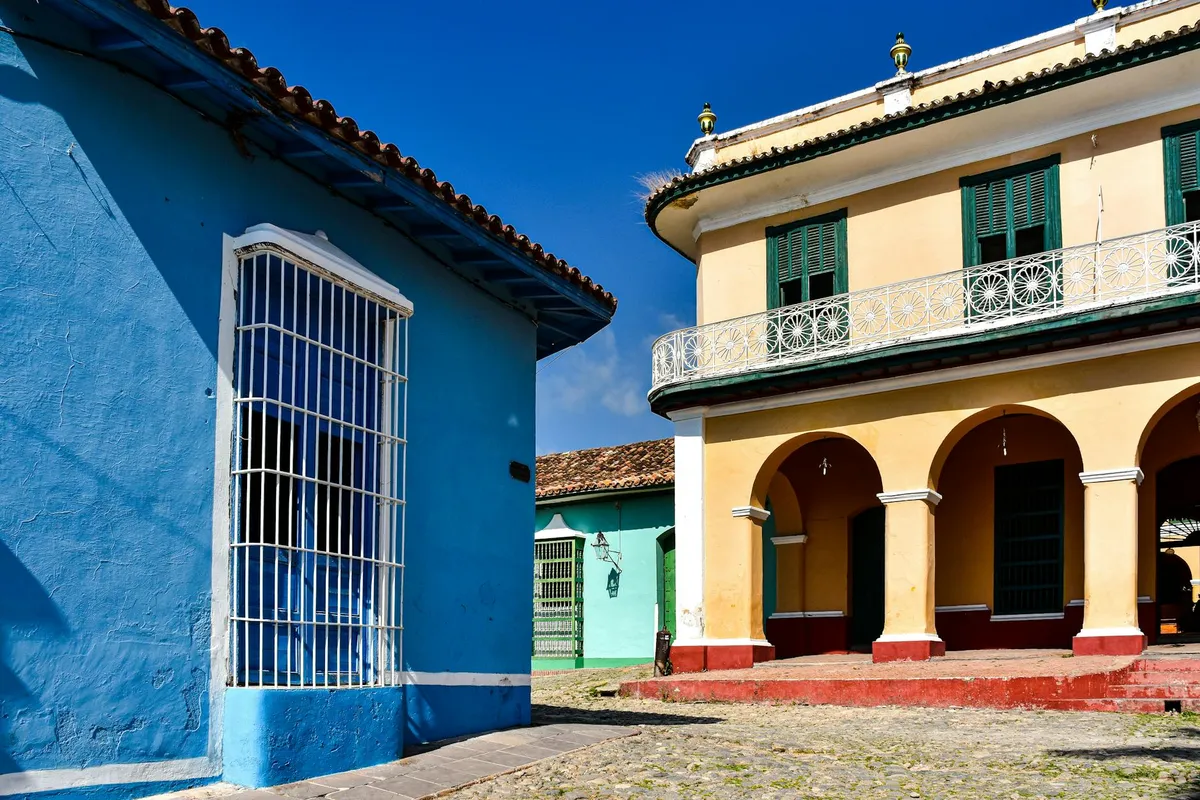
The international visitors are mostly there during the day on Sunday. They walk the cobbled streets in the historic center. They photograph the pastel-colored buildings. They eat at the paladares that have grown up to serve them. They listen to the son groups that play in the casa de la trova and at the various plazas. They leave, mostly, in the late afternoon, returning to their tour buses or to the cars that take them back to Havana or to the next stop on whatever circuit they are doing.
What happens after the visitors leave is what I want to write about. Sunday evening in Trinidad, after the tour buses have gone, is when the city becomes a city again. The Plaza Mayor, which during the day is full of visitors and guides and street vendors targeting the visitors, becomes by seven in the evening a plaza full of trinitarios doing what trinitarios do on Sunday evenings, which is to walk around, to sit on the benches, to chat with their neighbors, to take their children out for the evening air.
The casa de la trova continues to play. The musicians are largely the same musicians who played there during the day. The audience has shifted. The visitors who are still in town — the ones who stayed for the night, the ones who are not on the day-trip circuit — are joined by locals who have come out to drink a beer and to hear the music in the second register that the music plays in once the daytime crowd has gone.
What the music does in the second register
The son groups that play in Trinidad play, broadly, two repertoires. The daytime repertoire is the repertoire that the international visitors expect. The classic son standards that the international audience has heard before. The crowd-pleasers from the Buena Vista era. The songs that translate well to a listening audience that may not have much background in the form.
The evening repertoire is different. The same musicians, on the same stage, playing for an audience that includes more locals and fewer first-time listeners, will move into material that is more demanding and more interesting. Older songs from the local repertoire. Improvisations that build on the chord changes of the standards. Lyrical references that depend on the audience knowing the references. The musicians I have talked to in Trinidad over the years have all said, in different words, that the evening sets are when they get to play the music they actually want to play.
The tourists who stay for the evening, or who come back after dinner, sometimes get the benefit of this. The musicians are not playing for the tourists specifically in the evening, but the tourists who are present get to hear what the music does when the musicians are not principally performing for an export audience. The difference is substantial and is one of the things I would tell anyone who is going to Trinidad to plan for. Stay through the evening. The day is the day. The evening is what is actually happening.
What has changed and what has not
Trinidad has been substantially transformed by the tourism economy over the past two decades. The volume of visitors is much higher than it was when I first started going. The number of paladares is much higher. The number of casas particulares is much higher. The infrastructure of the visitor economy is more developed and more professional.
Some of the changes are good. The restoration of the historic buildings has been substantial and is, on the whole, well done. The income from tourism has supported the maintenance of the architectural heritage that the city is, in the international sense, famous for. The employment opportunities for trinitarios in the visitor economy have been a real economic input to the city in years when the broader economy has been constrained.
Some of the changes are more complicated. The character of the streets in the historic center has been substantially shaped by the visitor economy. The shops are visitor-oriented. The music venues are partly visitor-oriented. The food at many of the restaurants in the center has been calibrated to a sense of what visitors expect Cuban food to be, which is sometimes a calibration in the direction of dishes that are not what trinitarios actually eat at home.
The displacement effects are real. The cost of housing in the historic center has, by Cuban standards, risen substantially, with the rise driven partly by the casa-particulares economics. Some of the people who lived in the historic center twenty years ago have moved to the outskirts of the city. The neighborhoods just outside the UNESCO zone have become, in some cases, the actual residential center of the city, with the historic center serving more as a working district for the visitor economy than as a primary residential zone.
What has not changed
What has not changed is the underlying culture of the city. The trinitario ways of being a trinitario have not, as far as I can tell, been substantially altered by the visitor economy. The conversations in the plaza on Sunday evening are the conversations the same families have been having on Sunday evenings for generations. The music in the second register has not been altered by the visitor presence — if anything, the visitor presence has supported the continuation of the music by providing economic infrastructure for the musicians.
The relationship between trinitarios and the visitor economy is more nuanced than the simple stories about heritage tourism would suggest. The trinitarios I have spoken to about it have, in most cases, a clear-eyed view of what the visitor economy is and what it is providing. They are not in denial about the changes. They are also not in mourning for some imagined pre-tourist authentic city. The pre-tourist city was a poorer city. The current city is a more economically active city with the complications that economic activity brings. The trinitarios I know are managing the complications and are continuing to be trinitarios while they manage them.
The Sunday I want to describe
The Sunday I want to describe was the third of my three Sundays this past year. I was staying at a casa about three blocks from the Plaza Mayor, with a family I had stayed with before. The day had been the usual day — visitors in the morning and afternoon, the historic center crowded with the tour buses' day-trip flow.
I had spent the day partly in the city and partly outside it. I had walked out to the Topes de Collantes foothills for a couple of hours in the morning. I had eaten lunch with the family at the casa, which was the cook's day off from the casa's restaurant operation and which meant the family was eating the actual family lunch, which I had been invited to share. The lunch was congrí, ropa vieja, plantains, the same combination I had eaten a thousand times in different versions across the island. The version that Sunday was specifically good.
I went out to the Plaza Mayor around seven. The afternoon visitors had largely left. The plaza had returned to its trinitario configuration. There were maybe fifty people in the plaza, most of them locals, most of them sitting on the steps of the church or on the benches around the edges. A small son group was playing in front of the casa de la trova. The musicians were the same musicians who had been playing there in the afternoon. The repertoire had shifted.
I sat on the steps of the church for about two hours. I did not do anything in particular. I listened to the music. I watched the people in the plaza. I drank a beer. I talked to the woman next to me, who had grown up in the city and who was waiting for her grandchildren to come back from a friend's house. The light moved through its evening sequence. The plaza did what the plaza does on Sunday evenings.
I thought, sitting there, that the Trinidad that the international coverage describes is not wrong, exactly, but is also not the Trinidad I was sitting in. The Trinidad of the international coverage is the daytime Trinidad, the one that exists for the visitors. The evening Trinidad is the one that exists for the trinitarios. The two Trinidads coexist on the same physical streets and in the same buildings, but they are different cities operating in shifts.
The evening city is the one I think about when I think about Trinidad. The evening city is the one I would recommend to anyone who wants to understand what the place actually is. The evening city is the one I will go back to, the next time I am there, on a Sunday around seven, when the plaza returns to itself and the music shifts and the city becomes a city again.