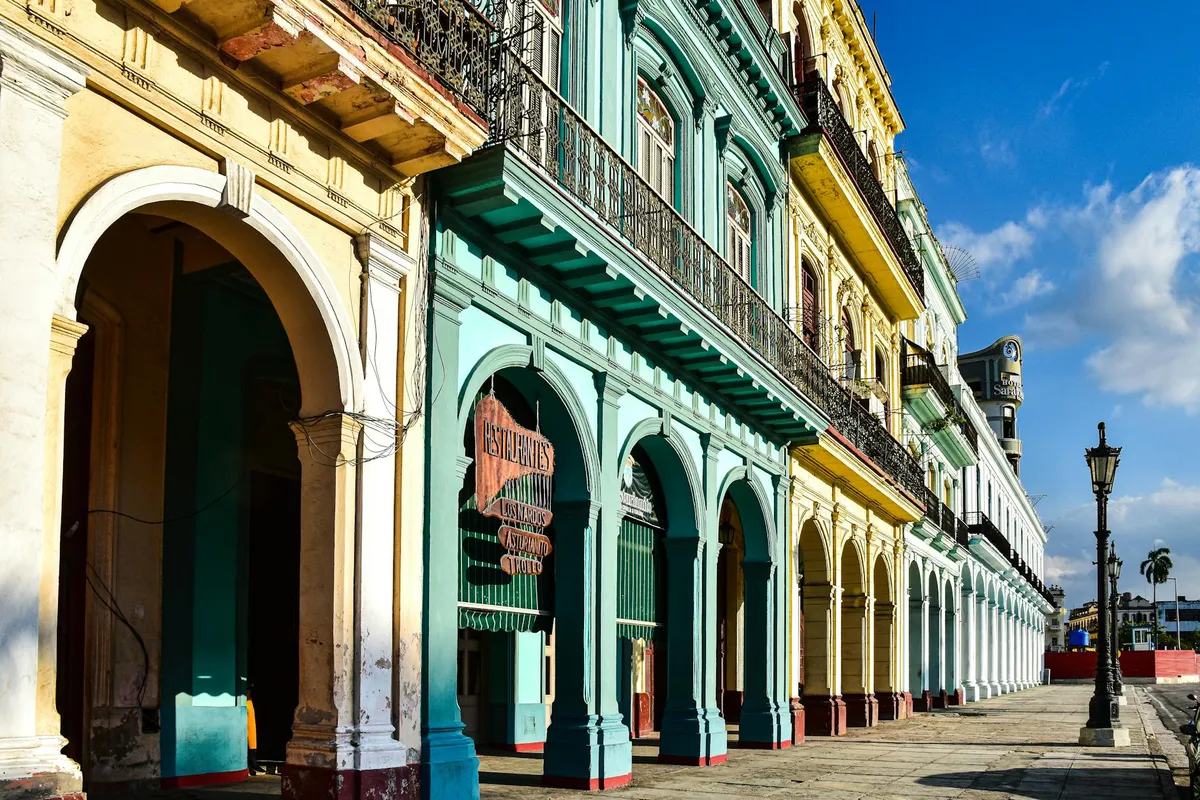
I left Havana in early 2018, when my grandmother's health turned and I moved back to Miami to be near my mother and to help. I went back for visits — short ones, usually under a week — through 2019 and into 2020, and then the pandemic happened and the practical mechanics of getting to the island became complicated, and the visits became less frequent and shorter when they happened, and somehow eight years went by during which I was never on the island for more than ten days at a stretch.
This past trip was three weeks. It was the first proper trip back in what felt like a long time. I want to write about what I noticed, because the writing-down of what has changed is part of how I process the place, and because the changes themselves are the kind of changes that the political coverage of Cuba tends to either inflate or dismiss, and I want to try to do neither.
What had changed in the apartment
The apartment is in El Vedado, in a building that was built in 1957, in a part of the building that has belonged to my family since the early sixties. My grandmother lived there. My great-aunt lived there. My mother grew up there. I lived there in my twenties. The apartment has been continuously occupied by women in my family for almost seven decades, which is a sentence I find slightly amazing every time I write it.
What had changed in the apartment was the air conditioner — which had been broken when I left and was broken in a slightly different way now — and the kitchen, which my cousin had partially repainted in 2022 in a shade of yellow that I did not love but which had grown on me by the second week. What had not changed was almost everything else. The same books on the same shelves. The same dishes in the same cabinet. The same fan I had used in 2017 on the same windowsill it had occupied then.
I had been worried, before the trip, about what the apartment would feel like without my grandmother. I had imagined the absence as a kind of pressure that would be hard to be inside. What I actually experienced was something more diffused. The apartment was still her apartment in the sense that her presence was in the choices that had made it the apartment — the books, the dishes, the way the light fell at four in the afternoon — but it was now also my apartment, in the sense that I was the one who had to figure out the broken air conditioner, and the figuring out was the way of being in the apartment that the next phase of being in the apartment was going to be made of.
What had changed in the neighborhood
El Vedado has changed less than the headlines would suggest and more than the apartment had. The most visible change was the number of small private businesses operating out of ground-floor spaces along Twenty-Third and along Línea. Cafés. Small grocery operations. A clothing shop. A barber that had been there for years but had expanded into the space next door. The street had a slightly different commercial texture than it had when I left.
The currency situation was the change I had been most curious about and was the change that turned out to be the most difficult to describe. The pesos cubanos and the dollar exist now in a relationship that has shifted multiple times since 2018, with the practical effect that everyday transactions involve a kind of multi-currency mental arithmetic that I was rusty at. Some things are priced in pesos. Some are priced in dollars. Some are priced in pesos but the price tracks the dollar exchange rate in real time. The mental work of figuring out what something actually costs is a substantial fraction of the mental work of being in the city.
The internet was better than I had expected. The mobile data network covered more of the city than it had in 2018, and the access to specific services was less spotty than it had been. The cost of the data was substantial relative to local incomes and the access was uneven in ways that mattered — the friend in Cerro whose neighborhood had patchy coverage could go a full day without functional internet — but the overall situation was better than the worst-case scenarios I had constructed before the trip.
What had changed in the people
Many of the people I had known had left. I had not been ready for the scale of this. Of my close circle of friends from the years I had lived in Havana — maybe twelve people I would have called regularly — six were no longer in the country. They were in Mexico, in Spain, in the United States, in Argentina. Two of them I had stayed in touch with closely. The other four I had drifted from over the years, which is the kind of drift that happens between people who used to live in the same city and now live on different continents.
The people who had stayed had stayed in the way that people who stay through difficult periods do. They had built lives around the constraints. They had figured out what they could and could not do. They had families and jobs and routines and arguments and small projects and ongoing problems with their water systems and ongoing strategies for getting hold of medicine for their parents. They were still themselves. They were not, in any obvious way, smaller versions of themselves than they had been when I left.
The conversations I had with the friends who had stayed were the conversations that took the most time to settle into. The first hour of any reunion was the catching-up that the messaging app had not quite covered. The second hour was the actual talking. The third hour, if there was a third hour, was the part where you could ask the question you had not known you were going to ask and could get the answer that you had not known you needed.
What had not changed
The light at four in the afternoon, on the corner of Línea and L, was the same. The smell of the bakery on G Street was the same. The exact way the wave hit the seawall in front of the Hotel Nacional was the same. The way you could tell, from half a block away, that the woman at the corner was selling peanuts because of the particular call she used, was the same. The shape of the conversation in the queue at the bank was the same. The texture of the sidewalk on certain blocks of Centro Habana was the same in the way that an inanimate object is the same — the cracks were the same cracks, the unevenness was the same unevenness, you put your foot down in the same place you had put your foot down five years earlier.
The Malecón at sunset was the same. I walked it on my third night back, by myself, and the sky did what the sky does in May in Havana, which is to do a particular kind of orange-and-then-purple thing for about twenty minutes and then to settle into a darker blue that fades to black over the next hour. There were the same people fishing. There were the same young people sitting on the wall. There was the same wind coming in off the water. The Malecón is one of those things that has not changed because the Malecón is structurally incapable of changing. The wall is the wall. The water is the water. The light is the light.
What I had not expected
I had not expected to feel like I belonged. I had been worried, in the lead-up to the trip, that eight years away would have made me a visitor in a place where I had previously been a resident. I had constructed elaborate scenarios in my head about how I would feel out of place and how the city would feel like it had moved on without me.
What actually happened was the opposite. Within forty-eight hours I was navigating the city the way I had navigated the city in 2017. I knew which corner to wait on for the almendrón to Centro. I knew which bakery had the better bread on which days. I knew which friends to call for which things. The muscle memory of having lived there was still there, intact, available to be picked up. I did not have to relearn the city. I had to remember what I already knew.
This was, on reflection, both reassuring and unsettling. Reassuring because the part of me that had worried about losing the connection had been wrong to worry. Unsettling because it raised the question of what exactly I had been doing in Miami for eight years, and what it meant that the version of me that had lived in Havana was still right there, intact, waiting to be reactivated whenever the conditions were right.
What I am taking back to Miami
I came back with the things I always come back with — coffee, rum, several books that my cousin had bought at the Plaza de Armas, photographs my grandmother had wanted me to have that I had not been able to bring on previous trips. I also came back with a feeling I did not have a clear name for, which was something like the feeling of having recovered access to a part of myself that I had not realized I had been managing without.
I do not know what to do with this. I do not know whether the feeling means I should be spending more time in Havana, or whether I should be doing more of my Miami life with the version of myself that the Havana time produces, or whether the feeling is just a feeling and the next trip will produce a different feeling. I have written it down here because the writing is how I figure things out, and because I expect to want to reread this piece in another five years and see whether the feeling I am describing now still has anything in it.
The next trip is in November. I have the ticket already. The apartment will still be there, the air conditioner will still be broken, and the woman at the corner will still be selling peanuts, and I will, very slowly and with considerable pleasure, remember everything again.